
What Is a Guideline? Definition, Examples, and How It Differs From a Policy
A guideline sets direction without creating a rigid rule. This article explains what a workplace guideline is, how it differs from a policy, and when HR teams should use guidelines to support consistent, judgment based decisions.


Guidelines set direction without creating rigid rules — and when HR teams use them well, employees understand what "good" looks like without being over-policed on everyday decisions. This article explains what a guideline is, when to use one, and how guidelines differ from policies, procedures, and SOPs.
What Is a Guideline?
A guideline is a written recommendation that helps employees make consistent decisions and follow preferred practices. Guidelines provide direction, examples, and guardrails, but they allow flexibility based on context.
In a workplace setting, a guideline typically:
- Explains the organization's preferred approach or standard of behavior
- Supports good judgment instead of strict enforcement
- Improves consistency across teams and managers
- Clarifies expectations when a situation has multiple reasonable options
Why Organizations Use Guidelines
HR teams and leaders use guidelines to create clarity without overcommitting to strict, enforceable rules. This is especially helpful in areas where:
- Situations vary by role, location, or client needs
- Leaders need discretion to manage edge cases
- Best practices may evolve quickly
- Overly strict requirements would create unnecessary employee relations issues
Guidelines are also useful when you want to influence behavior positively — encouraging inclusive meeting norms, improving documentation habits, or reducing after-hours communication.
Guidelines are different from standard operating procedures (SOPs), which provide detailed step-by-step instructions for completing a specific task the same way every time. Where an SOP tells someone exactly how to do something, a guideline tells them what good looks like and trusts their judgment on how to get there.
Guideline vs Policy: What Is the Difference?
The easiest way to separate the two is by answering one question:
Is this mandatory, enforceable, and tied to compliance or risk? If yes, you probably need a policy. If no, a guideline may be the better tool.
Key Differences
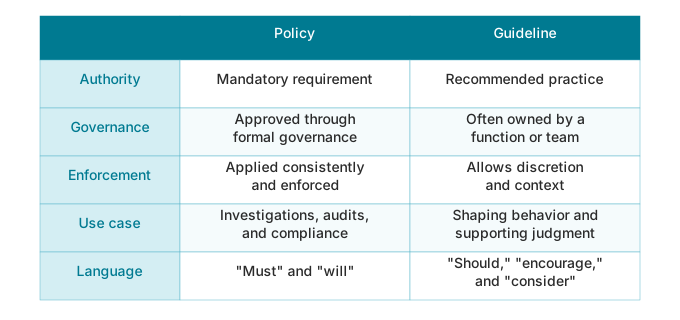
Example Comparison
- Policy: "Employees must wear required PPE in designated areas."
- Guideline: "Employees should avoid scheduling meetings over lunch whenever possible to support focus time."
For a deeper breakdown, including when mislabeling creates real risk, see our full article: Policy vs Guideline: Key Differences and When to Use Each.
When Should HR Use a Guideline Instead of a Policy?
Use a guideline when the organization wants consistency but does not want to create rigid, enforceable requirements.
Common scenarios:
- Best practice topics that evolve: communication norms, recruiting practices, inclusive leadership behaviors
- Manager discretion is necessary: handling minor attendance issues, structuring development plans
- Multiple valid approaches exist: interview note formats, team meeting structure, onboarding schedules
- You are shaping culture: values in action, collaboration norms, feedback expectations
When You Should Not Use a Guideline
Choose a policy instead when:
- There is legal or regulatory exposure (harassment, discrimination, wage and hour, safety requirements)
- Consistent enforcement is required
- You expect to discipline for violations
- You need audit-ready documentation
Guideline Examples for the Workplace
Below are examples HR teams commonly publish. Each one encourages consistency without requiring strict enforcement. The first two are expanded into mini-templates you can adapt for your own organization.
1) Workplace Communication Guideline
Purpose: Improve clarity and reduce miscommunication across teams.
Scope: All employees. Applies across email, messaging platforms, and virtual meetings.
Guiding Principle: Default to clarity and respect for others' time. When in doubt, over-communicate context and under-communicate urgency.
Recommended Practices:
- Use clear subject lines and include the ask in the first two lines of any message.
- Avoid sending non-urgent messages after local working hours. If you draft something after hours, schedule the send for the next business day.
- If a topic is sensitive or likely to be misread, use a live conversation instead of chat.
- When looping someone in mid-thread, provide a one-sentence summary so they have context without reading the entire chain.
When to escalate to policy: If communication issues involve harassment, threats, or repeated misuse of company channels, those fall under your acceptable use or anti-harassment policy — not this guideline.
2) Interviewing and Hiring Guideline
Purpose: Increase fairness and consistency in the hiring process without adding heavy process.
Scope: All hiring managers and interview panel members participating in structured interviews.
Guiding Principle: Every candidate should be evaluated against the same criteria for the same role. Structure reduces bias; consistency builds trust.
Recommended Practices:
- Use structured interview questions tied to core role competencies. Avoid free-form interviews where each interviewer asks whatever comes to mind.
- Take notes during interviews using the approved scorecard or template. Capture specific examples from the candidate's answers, not general impressions.
- Avoid unscored "culture fit" questions. Focus on role-relevant behaviors and how the candidate approaches work problems.
- Debrief with the full interview panel before making a hiring decision. Avoid anchoring by having each interviewer submit independent scores before group discussion.
When to escalate to policy: If a hiring practice involves legal compliance — background checks, EEO documentation, offer letter requirements — that belongs in your hiring policy, not a guideline.
3) Remote Work Guideline
Purpose: Provide guardrails for flexibility.
Example guideline language:
- Share your working hours and time zone on your calendar.
- Coordinate anchor days with your team when possible.
- Ensure confidential calls are taken in a private space.
4) Performance Feedback Guideline
Purpose: Improve coaching and documentation quality.
Example guideline language:
- Provide feedback close to the event, ideally within one week.
- Be specific about behavior, impact, and next expectations.
- Document major coaching conversations in writing.
How to Write a Guideline
A guideline should be easy to read, practical, and usable in the moment. If employees need a meeting to interpret it, it is too complex.
A Simple Guideline Structure
- Title and purpose — Explain what the guideline covers and why it exists.
- Scope — Who it applies to and where it applies (teams, locations, job levels).
- Guiding principles — One to three bullets that clarify intent and values.
- Recommended practices — The main section. Use "should," "encourage," and "consider."
- Examples and scenarios — Show what good looks like. This is where guidelines become usable.
- Owner and review cadence — Identify the function responsible and when it will be reviewed.
Writing Tips
- Keep it short enough to be referenced quickly.
- Use consistent language across the handbook — "must" for policies, "should" for guidelines.
- Avoid threats or disciplinary framing unless it is truly enforceable.
- Include examples so managers apply it consistently.
- Train managers on how to use the guideline with judgment, not just where to find it. Guidelines fail when they are posted and forgotten — implementation matters more than formatting.
FAQ: Guidelines in the Workplace
What is a guideline in HR?
A guideline in HR is a recommended practice that helps employees and managers make consistent decisions. It supports culture and operational consistency without creating strict, enforceable rules.
What is the difference between a guideline and a policy?
A policy is mandatory and enforceable. A guideline is recommended and flexible, designed to support judgment and consistency rather than discipline.
What is the difference between a guideline and an SOP?
A guideline explains the organization's preferred approach and lets people use judgment. A standard operating procedure (SOP) is a detailed, step-by-step set of instructions for completing a specific task the same way every time. Guidelines answer "what should we aim for?" while SOPs answer "how exactly do we do this?"
Are guidelines legally binding?
Usually not. Policies are more commonly used as formal standards in compliance and enforcement. Guidelines can still matter in practice, but they are generally not written or governed as strict requirements.
Should guidelines be in an employee handbook?
They can be, but many organizations separate them. Policies often live in the handbook because they are mandatory. Guidelines may live in a manager toolkit, intranet, or playbook so they can evolve more easily.
Can employees be disciplined for not following a guideline?
In most organizations, discipline should be tied to policy violations, not guideline deviations. If you expect discipline, you likely need a policy or a clearly stated requirement within an existing policy.
Bottom Line
A guideline is a practical governance tool that helps employees make consistent decisions without creating rigid rules. When HR teams clearly separate guidelines from policies — and from SOPs — they reduce confusion, improve manager consistency, and avoid over-enforcement. Use policies for mandatory requirements and risk. Use guidelines when context matters and good judgment is the goal.

